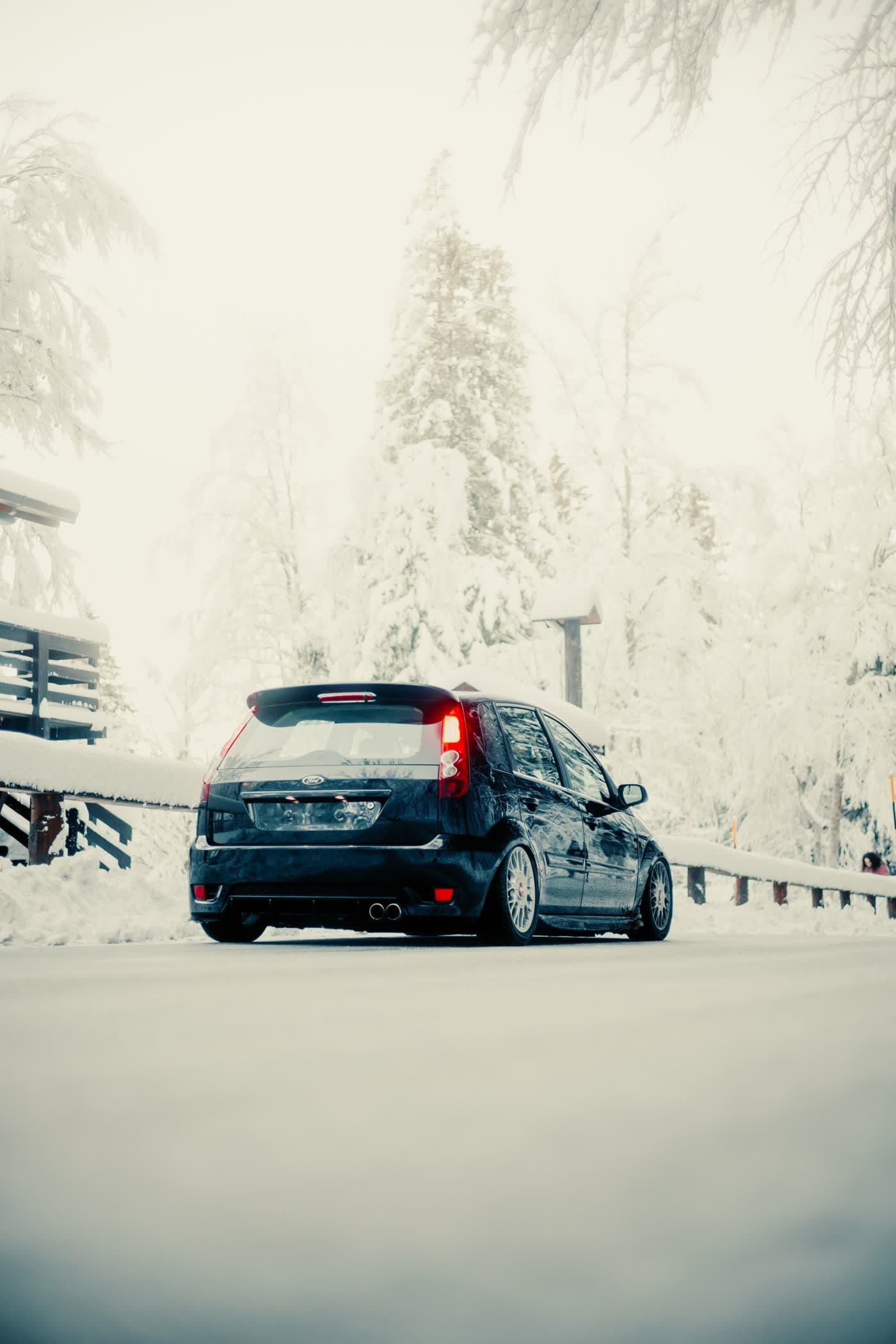
> TL;DR: PPF physically blocks salt, stone chips, and abrasion — it's impact protection. Ceramic coating repels salt, water, and grime so they don't bond — it's chemical and contamination protection. For maximum winter protection, you want both. If you can only do one, PPF wins for chip-prone zones; ceramic wins if you have good paint and want easier maintenance all season.
Why Toronto Winters Are Brutal on Paint
The GTA gets approximately 120 cm of snowfall per year — but the real threat isn't the snow. It's the road salt. Ontario uses a sodium chloride and calcium chloride mix that gets sprayed onto roads from November through March. Salt:
- Etches clear coat if left in contact (especially on warm, wet days)
- Accelerates rust and corrosion on chips and exposed metal edges
- Promotes brake dust adhesion and makes wheels harder to clean
- Creates a gritty slurry that acts as sandpaper when your wipers or a brush drag it across paint
On top of that, the freeze-thaw cycle causes road aggregate to crack and spray — leading to a high volume of stone chips, particularly on the front bumper, hood, and mirrors.
What Paint Protection Film Does in Winter
PPF (paint protection film) is a thick (typically 8 mil), self-healing thermoplastic urethane film applied directly to paint. Its job:
✅ Absorbs stone chips — the film takes the impact instead of your clear coat
✅ Self-heals light scratches — heat (from the sun or warm water) makes minor scuffs disappear
✅ Protects against salt etching — the film is chemically resistant; salt sits on the film surface, not your paint
✅ Prevents rock chip rust — no chip = no exposed metal = no rust nucleation point
Where PPF wins in winter: high-impact zones. Front bumper, hood leading edge, fenders, mirrors, and A-pillars take the brunt of stone chip spray. These are exactly the areas PPF is designed for.
Where PPF is limited: it's not a full-vehicle solution for most budgets. Full-body PPF is available but costs $6,000–$12,000+. Most clients opt for partial front PPF to protect the highest-risk zones.
What Ceramic Coating Does in Winter
Ceramic coating is a liquid polymer that bonds semi-permanently to paint and cures into a hard, hydrophobic layer. Its winter role:
✅ Repels salt spray — hydrophobic surface causes salt water to bead and roll off rather than dwelling on paint
✅ Reduces contamination bonding — brake dust, road grime, and salt crust are dramatically easier to rinse off
✅ Protects against light chemical etching — the ceramic layer takes the etching damage instead of your clear coat
✅ Easier maintenance washes — a quick rinse removes most winter contamination; you're not spending an hour scrubbing salt off every week
✅ UV protection — less relevant in winter, but prevents summer UV damage year-round
Where ceramic wins: whole-vehicle protection at a fraction of full-PPF cost, especially for contamination resistance and maintenance simplicity. A properly maintained coated car emerges from a Toronto winter in far better shape than an unprotected one.
Where ceramic is limited: it doesn't prevent stone chips. A chip on a ceramic-coated car is still a chip. The coating makes the paint easier to maintain but doesn't absorb physical impacts.
Head-to-Head: PPF vs. Ceramic for Toronto Winters
| Protection Type | PPF | Ceramic Coating |
|---|---|---|
| Stone chip protection | ✅ Excellent | ❌ None |
| Salt / chemical resistance | ✅ Excellent | ✅ Very Good |
| Self-healing scratches | ✅ Yes (heat-activated) | ❌ No |
| Ease of winter washing | ✅ Good | ✅ Excellent |
| UV protection | ✅ Good | ✅ Excellent |
| Full-vehicle coverage affordability | ❌ Expensive | ✅ Affordable |
| Durability | 7–10 years | 3–7 years |
The Best Answer: Stack Both
PPF and ceramic coating are complementary, not competing. The most common approach:
1. PPF on high-impact zones (front bumper, partial hood, fenders, mirrors) — blocks chips and physical damage
2. Ceramic coating over the rest of the vehicle (and optionally over the PPF itself) — repels contamination, simplifies maintenance, protects paint everywhere else
This combo gives you chip protection where it matters most and whole-vehicle contamination resistance for the rest. After a salt-heavy Toronto winter, the difference vs. an unprotected vehicle is dramatic.
Timing: Should You Do It Before Winter?
Yes — ideally by October. Here's why:
- Ceramic coatings need 24–48 hours of cure time at moderate temperature before exposure to water or cold. A pre-winter install gives the coating time to fully cure before salt season.
- PPF can be installed year-round, but installation in cold temps requires a heated shop (which we have). Pre-winter timing means protection is in place for the worst months.
- Post-winter is also excellent for paint correction + coating if you want to address winter damage, but you miss the protection window.
What If My Car Already Has Chips?
If your front bumper already has a scattering of chips from last winter, the right sequence is:
1. Touch up exposed chips with paint pen or professional touch-up
2. Apply PPF (which protects the repaired areas going forward)
3. Optionally, ceramic coat the rest of the vehicle
Leaving chips unprotected through another salt season accelerates rust. Even a basic touch-up + PPF makes a significant difference.
---
Frequently Asked Questions
Can I get ceramic coating in winter?
Yes — our shop is climate-controlled, so ceramic coating can be installed year-round. We maintain proper ambient temperature and humidity for correct curing.
Does PPF need to be replaced after winter?
No — quality PPF is designed for 7–10 year lifespans under normal conditions including Toronto winters. It can be replaced or removed section-by-section if a panel takes significant damage.
Do you serve Oakville and Burlington for winter protection packages?
Yes — we serve clients throughout the GTA including Oakville, Burlington, Etobicoke, and surrounding areas.
Is there a package that includes both PPF and ceramic?
Yes — contact us to build a custom package. Many clients do partial front PPF (bumper, hood leading edge, mirrors) + full-vehicle ceramic coating in a single appointment.
---
📍 Advanced Vehicle Guard | 222 Evans Ave., Etobicoke, ON M8Z 1J8 | (647) 874-7318
Book Your Winter Protection Package · PPF Details · Ceramic Coating Details · Full Pricing