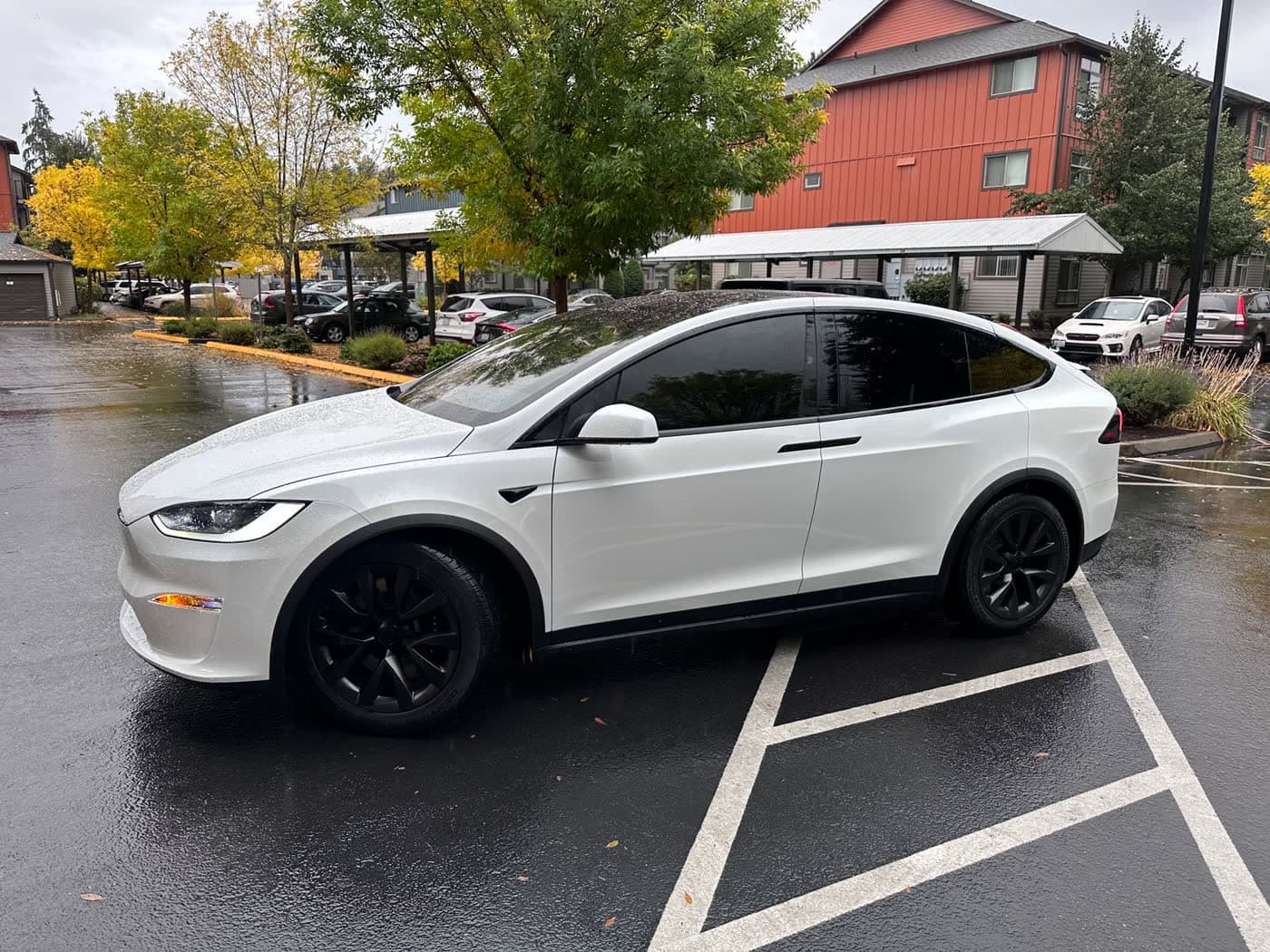
> TL;DR: Ceramic tint rejects significantly more heat, lasts much longer, doesn't fade, and carries a better warranty than dyed or basic carbon film. At our shop, ceramic adds $100 to $350 over dyed film on a full sedan. For most drivers who plan to keep their vehicle 3+ years, ceramic is the better long-term value. Read on for the full comparison.
What "Regular" Window Tint Actually Means
"Regular" tint covers two different film types that are often lumped together:
Dyed film — the most common entry-level film. A layer of dye absorbs light and reduces glare. Inexpensive and available everywhere, but on unbranded film the dye breaks down with UV exposure over time, turning purple or blotchy within 2–4 years. Offers minimal heat rejection — it absorbs heat rather than reflecting it, which means the glass itself gets hot.
Carbon film — a step up. Carbon film uses carbon particles instead of dye, which means it doesn't fade. Better heat rejection than dyed film, clean matte-black appearance, no signal interference. A solid mid-range choice.
Ceramic film — the premium tier. Nano-ceramic particles in the film block infrared heat and UV without dye or metal layers. Doesn't fade, doesn't interfere with signals, and rejects significantly more heat than carbon or dyed films.
The Performance Comparison
| Factor | Dyed Film | Carbon Film | Ceramic Film (e.g. XPEL Prime XR Plus) |
|---|---|---|---|
| Heat rejection (TSER) | 25–35% | 35–50% | 52–66% |
| UV rejection | 70–90% | 95–99% | 99%+ |
| Infrared rejection | Low | Moderate | High |
| Colour fade over time | Yes (purple) | No | No |
| Signal interference | None | None | None |
| Lifespan | 3–5 years | 5–8 years | 10+ years |
| Warranty | Limited | Good | Lifetime (manufacturer) |
The Heat Difference — What It Actually Feels Like
The biggest practical difference between dyed/carbon and ceramic tint is cabin heat on a hot day.
Dyed film absorbs solar energy — the glass itself heats up, and that heat radiates into the cabin. You've probably sat in a car with tinted windows on a 30°C day and noticed the windows are hot to the touch. That's dyed film doing exactly what it was designed not to do.
Ceramic film reflects and rejects infrared energy before it enters the glass. The glass stays cooler, the cabin stays cooler, and your air conditioning runs less hard to maintain a comfortable temperature. In a Toronto summer — where surface temperatures can hit 35°C+ — the difference is immediately noticeable.
For vehicles with large glass areas (panoramic sunroofs, Tesla Model Y, SUVs with full-length roofs), the cabin heat difference between dyed and ceramic tint is especially significant.
The UV Difference
Both carbon and ceramic films block 99%+ of UV radiation. Dyed film is less consistent — cheaper dyed films may only block 70–80% of UV, and as the dye degrades, UV rejection decreases further.
UV protection matters for:
- Skin protection — the driver's left arm and face receive continuous UV exposure during daytime driving
- Interior protection — UV fades leather, vinyl, and plastic dashboard trim over time; film on all windows significantly slows this
- Windshield strip — a ceramic strip across the top of the windshield adds UV protection where most people receive the most direct sun exposure
Is the Price Difference Worth It?
Here's a realistic cost comparison for a mid-size sedan in Toronto in 2026:
| Film Type | Full Vehicle (excl. windshield) | Expected Lifespan | Cost Per Year |
|---|---|---|---|
| Dyed film | $180–$280 | 3–5 years | $45–$75/year |
| Carbon film | $300–$450 | 5–8 years | $45–$75/year |
| Ceramic (XPEL Prime CS) | $480–$650 | 10–15 years | $35–$55/year |
| Ceramic (XPEL Prime XR Plus) | $700–$950 | Lifetime | Under $50/year |
Every film in that table carries a lifetime warranty, so the extra you pay for ceramic buys comfort rather than longevity: noticeably more heat rejection on every hot day you drive.
The case for Autobahn Black: if privacy and glare are what you're after and cabin heat isn't a priority, it's the lowest-cost way to get a warrantied tint.
What About "Carbon-Ceramic" Films?
Some films are marketed as "carbon-ceramic" or "hybrid" — these combine carbon and ceramic technologies to land between pure carbon and pure ceramic in both performance and price. XPEL Prime CS is a carbon-ceramic hybrid — better heat rejection than carbon alone, more accessible price than Prime XR Plus or XR Black.
For clients who want ceramic-level quality without the full premium, carbon-ceramic is a strong middle ground.
Our Recommendation
For most clients keeping their vehicle more than 2 years: ceramic film. The performance is meaningfully better, it doesn't fade, and it comes with a manufacturer warranty that covers the life of the vehicle.
For clients on a tighter budget: Autobahn Black Ceramic, which starts at $200 for the two front windows and still gives you ceramic heat rejection.
The one dyed film we install is Autobahn Black, because it carries a lifetime warranty. What we avoid is unbranded dyed film with no warranty, which is the tint that fades and turns purple within a few years.
Protecting the Rest of the Vehicle
Window tint protects your glass and interior from heat and UV — but it doesn't do anything for your paint. Most clients getting a full ceramic tint package are already investing in long-term protection, so it's worth doing the same for the exterior:
- Ceramic coating bonds to your clear coat the same way ceramic tint bonds to your glass — hydrophobic, UV-resistant, and easier to keep clean between washes.
- Paint protection film (PPF) physically blocks the stone chips and road debris that tint can't touch, on the front-end panels that take the most impact.
Booking tint alongside a ceramic coating or PPF package in the same visit is common — ask us about bundled scheduling when you book.
---
Frequently Asked Questions
Can I tell the difference between ceramic and carbon tint just by looking?
At the same VLT level, the visual appearance is very similar. The difference is performance — heat rejection, UV blocking, and longevity — not appearance.
Does ceramic tint look different from regular tint?
Ceramic film at lighter VLT levels (35–70%) has a very clean, clear appearance compared to dyed film which can have a slight green or blue cast. Carbon and ceramic films tend to have a neutral, true-black tone.
Is XPEL ceramic tint available at most shops?
XPEL products are only available through certified installers. Not all shops carry them — ask specifically for the film brand and model.
Do you install ceramic tint near Richmond Hill and Markham?
Yes — we serve clients from across the GTA, including Richmond Hill and Markham, from our Etobicoke location.
Is ceramic tint better than regular tint?
For most drivers, yes. Ceramic film rejects significantly more heat, blocks more UV, won't fade to purple, and carries a lifetime manufacturer warranty — regular (dyed) film degrades within a few years and offers minimal heat rejection by comparison. The exception is a vehicle you plan to sell within a year or two, where the long-term advantages matter less.
What is the difference between ceramic tint and regular tint?
Regular tint usually means dyed film, which absorbs heat and fades over time. Ceramic tint uses nano-ceramic particles that reflect infrared heat instead of absorbing it, blocks more UV, and keeps its colour and clarity for the life of the vehicle. See the performance comparison table above for exact heat-rejection and UV numbers.
Is ceramic tint more expensive than regular tint?
Yes. At our shop, a full sedan starts at $325 in Autobahn Black dyed film and $425 in Autobahn Black Ceramic, rising to $675 in Ceramic i3+. Every one of those films carries a lifetime warranty, so the extra buys heat rejection.
How much more does ceramic window tint cost than regular tint?
For a sedan at our shop, the full vehicle starts at $325 in Autobahn Black dyed film and $425 to $675 in Autobahn ceramic, depending on the film. That's $100 to $350 more for ceramic. XPEL Prime films are quoted per vehicle.
Is ceramic tint lighter than regular tint?
No — "lighter" and "darker" refer to VLT (visible light transmission), which is independent of film type. Ceramic, carbon, and dyed film are all available at the same range of shades; the difference is in heat and UV performance, not how dark the film looks.
---
📍 Advanced Vehicle Guard | 222 Evans Ave., Etobicoke, ON M8Z 1J8 | (647) 874-7318
Book Ceramic Window Tinting · See Our Window Tinting Service · Compare All Pricing